Press Release · GOFO
GOFO White Paper Highlights Structural Shift in U.S. Last-Mile Delivery
Distributed by The Amazing Web · Originally issued via PR Newswire
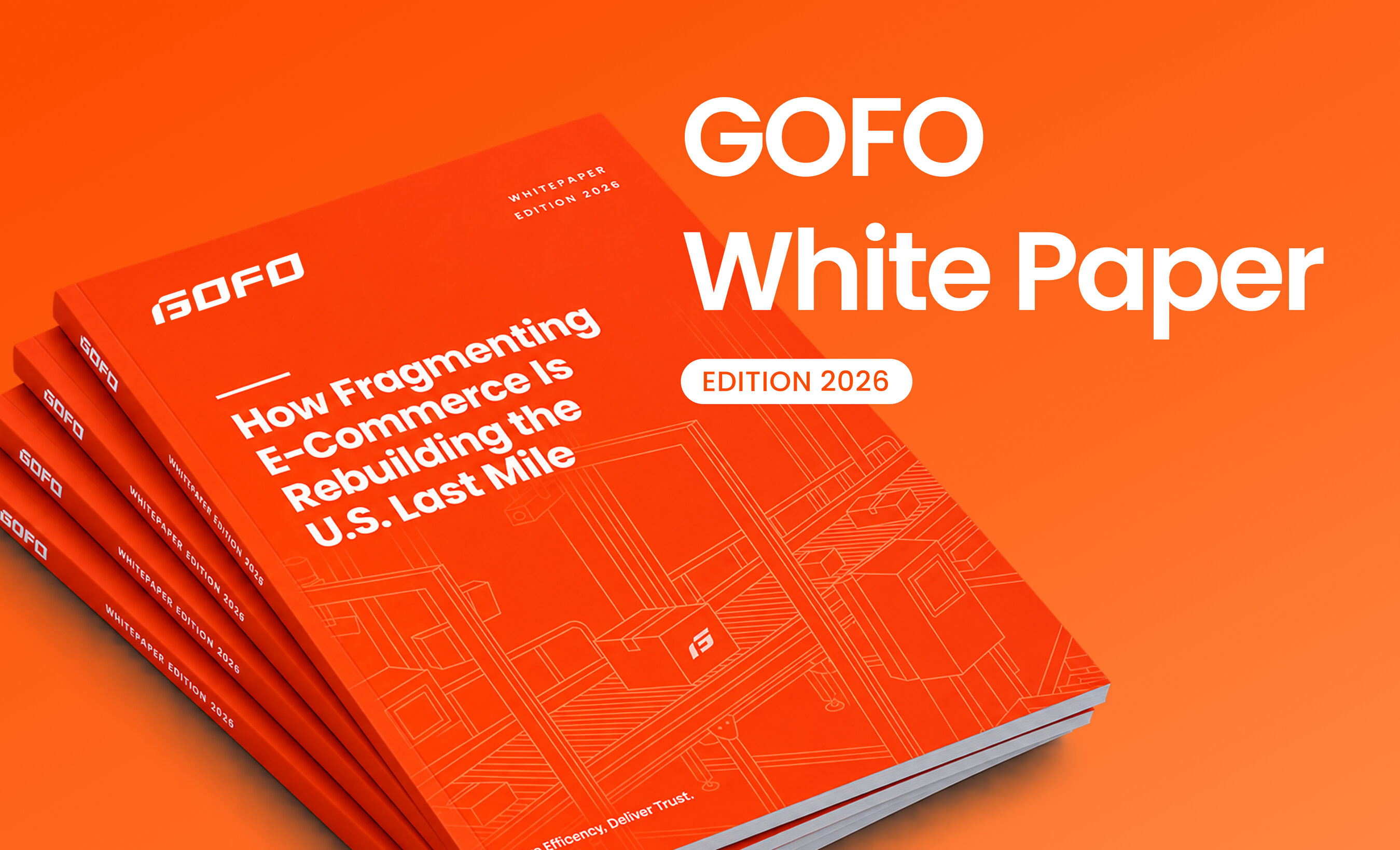
The white paper examines changing carrier dynamics, fragmented e-commerce demand and strategies for shippers navigating an evolving parcel market.
LOS ANGELES, Nov. 9, 2026 — GOFO, a technology-driven global last-mile delivery carrier, highlights a structural shift in the U.S. parcel market in its industry white paper, How Fragmenting E-Commerce Is Rebuilding the U.S. Last Mile, first introduced at PARCEL Forum 2026 in September. Drawing on third-party market research, industry data and customer case studies, the report examines how changing strategies among established carriers and increasingly fragmented e-commerce demand are creating room for a broader range of delivery networks and reshaping carrier selection for shippers.
A Changing U.S. Parcel Market
According to ShipMatrix data cited in the white paper, U.S. domestic parcel volume reached 23.9 billion packages in 2025, an increase of 0.4% year over year (ShipMatrix, 2026). Amazon Logistics surpassed USPS as the nation's largest domestic parcel carrier by volume, delivering 6.7 billion packages, up 9.9%, compared with USPS's 6.6 billion (ShipMatrix, 2026).
Amazon's expansion represents a significant development in a market historically dominated by UPS, FedEx and USPS. Meanwhile, UPS has been reducing lower-value Amazon volume, FedEx is emphasizing higher-value shipment segments, and USPS continues competing for lightweight e-commerce deliveries while adjusting its pricing and service mix.
On the demand side, e-commerce is becoming increasingly fragmented. According to eMarketer estimates cited in the report, Amazon accounted for approximately 40.5% of U.S. retail e-commerce sales in 2025, with the remaining 59.5% distributed across other marketplaces, retailer websites and direct-to-consumer channels (eMarketer, 2025). This diversification is creating more varied shipment patterns, fulfillment arrangements and delivery requirements.
The Rise of Alternative Carriers
As traditional carrier strategies and e-commerce demand evolve, alternative delivery networks are expanding their presence in the U.S. parcel market. ShipMatrix's "Other Carriers" category, which includes retailers' own delivery networks and independent regional carriers, reached approximately 2.5 billion packages in 2025, with reported growth of 13% (ShipMatrix, 2026).
The white paper identifies a range of emerging operating models, including cross-border specialists, technology-enabled urban delivery platforms and super-regional networks. Rather than following a single standardized approach, these carriers serve different geographic markets, shipment profiles and fulfillment needs.
This evolving landscape is giving shippers a broader range of delivery options. The report recommends evaluating carriers based on total transportation costs, geographic coverage, service reliability and technology integration, while maintaining diversified carrier relationships to reduce dependence on individual networks.
Customer Case Studies Highlight the Importance of Carrier Readiness
Drawing on GOFO's experience with Dr. Squatch and ShipMonk, the white paper illustrates how alternative carriers can support shippers when existing delivery arrangements are disrupted.
According to the case studies, Dr. Squatch expanded its relationship with GOFO from a monitored pilot to a core carrier arrangement after an existing provider became unavailable at short notice. During the transition, the average calendar transit time improved from 3.75 to 3.15 days.
ShipMonk faced an unplanned carrier transition within its Economy delivery tier. GOFO became operational within ShipMonk's Virtual Carrier Network in 10 days and completed onboarding across its network nodes within 35 days. Over a comparable off-peak period, average transit time improved from 2.56 to 2.10 business days.
Both cases illustrate how advance carrier integration and diversified delivery options can support service continuity during unexpected disruptions.
Looking Ahead
The white paper concludes that U.S. last-mile delivery is undergoing a long-term structural realignment rather than a temporary market cycle. As delivery networks diversify, operational flexibility, real-time shipment visibility and technology integration are expected to become increasingly important in carrier evaluation.
For shippers, adapting to this environment will require delivery strategies that balance cost, coverage, reliability and flexibility across different fulfillment models.
The full white paper, How Fragmenting E-Commerce Is Rebuilding the U.S. Last Mile, provides additional market analysis, customer case studies and a detailed carrier evaluation framework. It is available on GOFO's website.
Media Contact:
Cindy L.
Public Relations, GOFO
[email protected]
LinkedIn
SOURCE GOFO
About GOFO
GOFO is a technology-driven global last-mile delivery carrier founded in Los Angeles in August 2023. Guided by the brand philosophy "Drive Efficiency, Deliver Trust", GOFO combines advanced technology with localized operations to provide reliable and scalable delivery solutions. GOFO's network spans 47 U.S. states, supported by more than 300 hubs and stations. In Canada, GOFO has established a delivery network anchored by two primary hubs in Vancouver and Toronto, with service coverage across five provinces. Supported by an integrated North American network, automated sortation, intelligent routing, and disciplined operations, GOFO provides GOFO Parcel for standard parcel delivery and GOFO Ground for heavyweight, oversized, and complex shipments, delivering efficient, reliable, and scalable last-mile solutions across diverse markets. More information is available at gofo.com.